


The Real Ownership Cost of Battery-Powered Lawn Mowers vs Gas
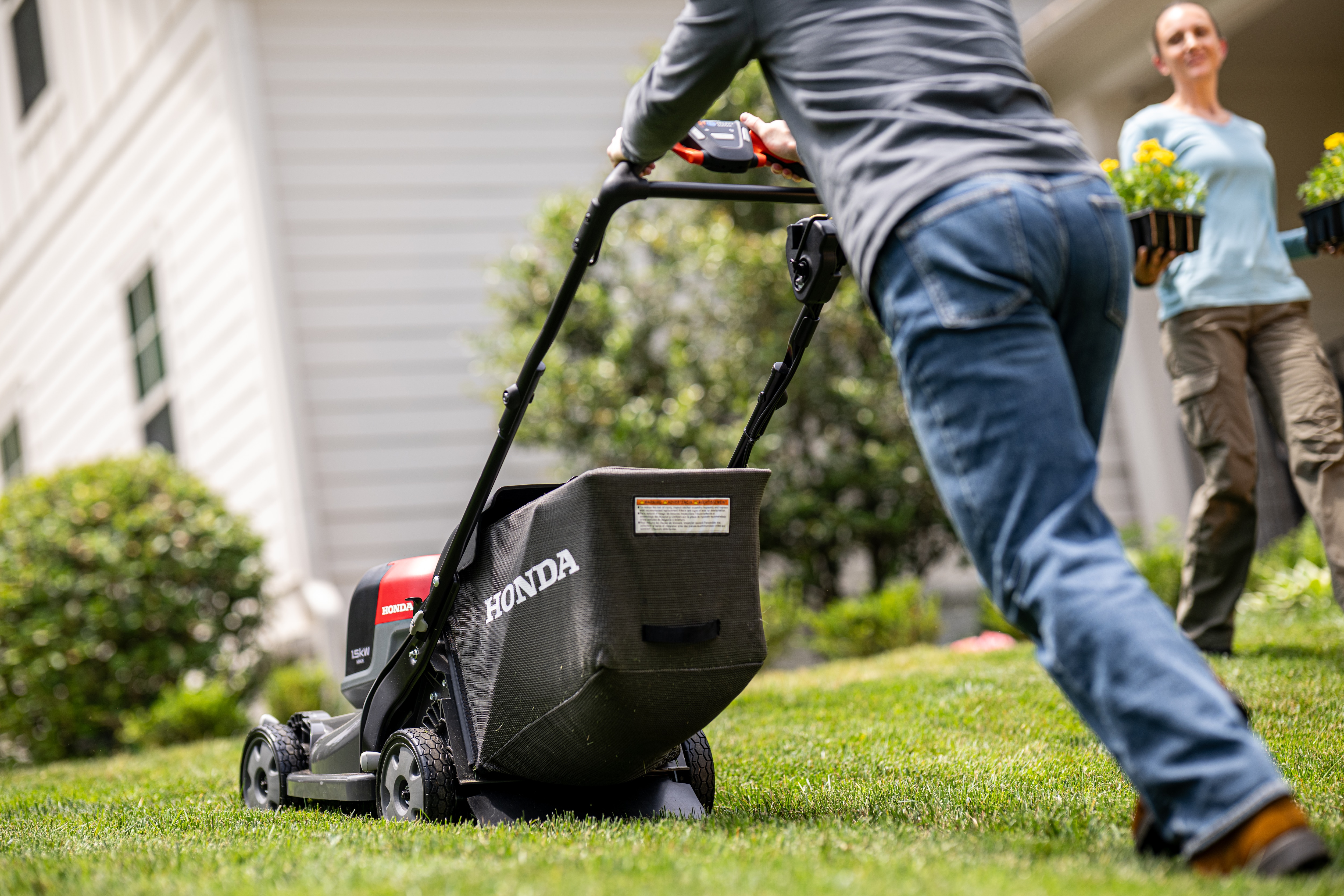
Picture this: It’s a quiet Saturday morning, the sun is out, and the smell of fresh cut grass is in the air. As you’re mowing the lawn, there’s no roar of a gas engine, just the crisp sound of cutting the grass. This is the reality for millions of people across the US who cut their grass with a battery mower.
If you’re considering switching to an electric mower, one of your biggest concerns is likely electric versus gas lawn mower cost. In particular, many consumers wonder: Is the higher initial electric lawn mower cost justified by long-term savings?
The debate surrounding the cost of ownership for an electric mower versus gas comes down to the value of the lifestyle upgrade. For many lawn care enthusiasts, it’s worth switching to electric to prioritize time and peace of mind over greater maintenance.
Honda brings 60 years of engineering excellence to the evolving battery-powered lawn mower market. Our refusal to compromise on quality is why legendary Honda reliability remains the standard in lawn care.
The Initial Investment: How Much Does an Electric Lawn Mower Cost?
While it’s true that the initial cost of an electric lawn mower is usually higher than that of a gas mower, it’s a strategic investment in a high-performance power system. An electric mower also pays for itself over time by saving you years of fuel usage.
For the Honda HRN-BV mower, the starting MSRP is $899, but dealers set their own prices. The HRX series mowers range from an MSRP of $1,049 to $1,299.
Keep in mind that the premium entry price is a reflection of Honda’s durable engineering. With a brushless motor and high-capacity lithium-ion batteries, electric mowers from Honda are built to deliver reliable performance for years. Our mowers also come loaded with premium convenience features like push-button starting and multi-purpose bagging and mulching systems.
Purchasing a battery-powered mower also removes the immediate need to buy (and store) separate gas-engine support equipment like fuel cans. The only accessory needed for your battery mower is the charger.
Honda battery mowers also offer long-term value and retain their resale value better over time. The premium NeXite® deck on our walk-behind electric mowers uses a durable polymer to ensure your mower remains a valuable asset long after your initial purchase.
Standard on all our HRX series mowers, this premium, lightweight deck material resists dents and will never rust. At the same time, the sleek design offers improved vacuum lift and directs cut grass back into the blades for finer clippings.
Lowering Your Usage Cost: Electric vs Gas Lawn Mower Cost Comparison
Not only does an electric mower reduce your long-term costs, but it also makes them more stable and predictable than with a gas mower. Fuel costs can vary widely year to year and even month to month.
An economic shift or political conflict can also cause fuel prices to soar unexpectedly, increasing the operating cost of a gas mower. Overall, the energy required to charge a Honda battery costs only pennies per mow, while gas expenses change every season.
In addition to financial savings, battery mowers allow you to reclaim the hours spent driving to the gas station to fill fuel cans, replacing belts, and changing oil.
The transition from gas to battery power can also come with rebates that can make the switch easier. Many areas offer gas-for-electric exchange programs and tax credits that can significantly lower the effective purchase price of an electric mower.
It’s a common misconception that you need several extra batteries to get through one mow. In reality, you can mow a ¼-½ acre lot on a single charge with Honda’s included 8Ah or 12 Ah packs. The long-lasting charge minimizes the need for extra batteries.
Maintenance Savings: Cutting the Cost of Ownership for Electric Mower vs Gas
Lower electric lawn mower maintenance costs aside, imagine never having to do that “springtime tune-up” ever again. Homeowners who switch to a Honda battery mower can reclaim their free time and seasonal productivity.
These are just some of the maintenance expenses you can permanently remove from your budget with a battery mower:
- Oil changes
- Air filter replacements
- Spark plugs
- Fuel stabilizing
The biggest maintenance task you’ll need to keep up with for a battery mower is cleaning the deck, just like with a gas mower. Additionally, you should ensure the mower blades remain sharp and get them either sharpened or replaced by your local Honda dealer when required. Apart from that task, electric lawn mowers don’t require much upkeep.
While battery mowers typically have much lower long-term ownership costs than gas mowers, there are still a few potential expenses to consider.
Lithium-ion batteries are durable, but they do eventually start to lose charging capacity. You can reasonably expect a mower battery to last between 3 and 5 years before you need to replace it. For most homeowners, that translates to 500 - 1,000 full charge cycles. The exact battery-powered lawn mower longevity you can expect depends on how often you mow and the size of your lawn.
8Ah replacement batteries start at $429. Honda batteries come with a 3-year residential warranty and a 2-year commercial warranty that can cover the replacement cost if your battery fails prematurely.
While an electric mower from Honda eliminates routine mechanical work, they rely on proprietary circuit boards. This means a breakdown usually requires authorized Honda diagnostic service. However, your warranty covers the cost of repairing damage resulting from normal use or defective parts.
The chassis and drive systems of every Honda battery mower are built with the same professional-grade durability that has defined our brand for over 60 years. That’s why we back every model with a robust manufacturer warranty.
Performance Without Compromise: The ROI of Battery-Powered Lawn Mowers
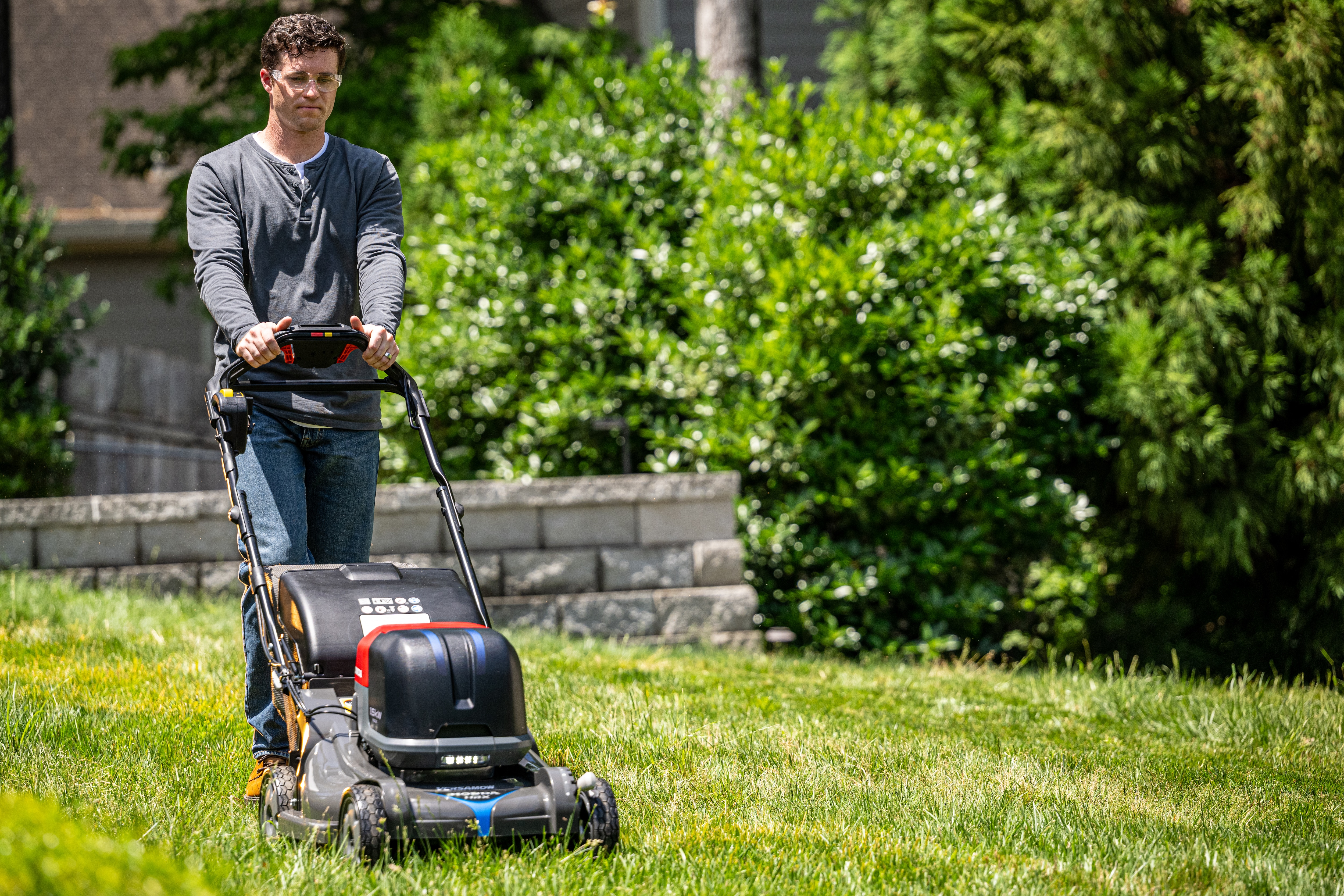
Switching to an electric mower doesn’t have to mean compromising on cut quality. Honda’s MicroCut System® provides a best-in-class finish. These precision machines protect your investment by delivering a perfect cut on the first pass.
Plus, the twin blade system produces finer grass clippings than traditional single blade mowers. These clippings can recycle nutrients back into the soil, improving your lawn health and potentially reducing the need for expensive lawn fertilizers.
If you prefer to collect clippings for mulching, Honda battery mowers offer an adjustable mulching system that can bag, discharge, or mulch clippings with a simple knob selector. Every Honda mower also comes with a 3-to-5-year residential warranty as part of our brand’s commitment to the long-term mower value and performance of our machines.
Another benefit we haven’t touched on yet is the “environmental lawn mower ROI” that comes with switching to a battery mower:
- Electric power eliminates the emissions equivalent of a 45-mile car drive for every hour of mowing.
- “Currently, a new gas-powered mower running for 1 hour produces similar emissions to the average car driving for 100 miles.”
In addition to reduced carbon emissions, a battery mower is significantly quieter than a gas mower. Not only will the reduced noise save your hearing, but it will also make your mowing less of a disturbance for your neighbors. This can be a huge benefit in areas with an HOA or noise ordinances.
Electric mowers from Honda also offer improved handling over gas mowers. Electric lawn mowers weigh less and are easier to steer than self-propelled gas mowers.
Make the Move to a Premium, Battery-Powered Experience
The data is clear: switching a battery-powered mower means a lower cost of ownership in the long term. Some of the ways an electric mower can reduce the total cost of ownership include:
- Fuel costs: The cost of charging a lithium-ion battery is not only much lower than the cost of refilling a gas tank, but it’s also more stable than unpredictable global gas and oil markets.
- Maintenance costs: Battery mowers eliminate the need for oil changes, fuel stabilizing, air filters, and spark plugs.
- Time savings: Eliminating maintenance and refueling at the gas pump also saves you precious hours every year, improving your productivity.
- Tax incentives: Many states offer tax breaks for using electric mowers that can help offset the initial purchase price.
- Reduced emissions: With each hour of mowing using a battery mower from Honda, you eliminate the carbon emissions equivalent of a 45 miles drive in a car.
Electric mowers also offer a premium mowing experience, with super quiet motors, no exhaust smell, and smooth, easy handling. Say goodbye to mechanical maintenance and start enjoying the low operating cost of a battery mower.
Are you ready to enter the future of turf care? Partner with Honda to experience a brand that has defined reliability for generations. Discover the right battery-powered mower for your lawn and find your local Honda dealer today.

FAQs About Electric Lawn Mower Cost and Value
Is an electric vs gas lawn mower really cheaper to own over 5–10 years for a 1/4–1/2 acre yard?
Yes, an electric mower has a much lower long-term cost over 5-10 years than a gas mower, especially for a smaller lot of ¼-½ acre. While electric mowers cost more upfront, eliminating the cost of refueling and mechanical maintenance offsets the price over time. In some states, you can further offset the initial effective price by making use of tax credits for switching from gas to electric.
How many batteries do I need to comfortably mow a 1/4–1/2 acre lot without stopping to recharge, and what’s the cost of an extra pack?
You may be able to mow a ¼-acre lot on a single charge, especially with a more powerful 12Ah battery. However, two fully charged 8Ah batteries are sufficient to mow a ½-acre lot. A replacement Honda battery starts at an MSRP of $429, but exact prices may vary by dealer.
How long do the batteries take to recharge, and can I realistically mow, recharge, and finish the lawn in a single day if needed?
A Honda battery pack takes 1-1.5 hours to fully charge, depending on the capacity (8Ah vs 12Ah). A fully charged battery yields about 45 minutes of mowing time. It is entirely possible to mow, recharge, and finish a ½-acre or smaller lawn in a single day. To avoid needing to recharge, having an extra battery pack allows you to charge one battery while using another.
What is the estimated return on investment (ROI) period for a professional or homeowner?
For homeowners switching from a gas mower to a Honda battery mower, you can expect to see a return on your investment in three years or less. Between fuel savings and reduced maintenance, a battery mower will pay for the higher initial cost over time.
For lawn care professionals who use mowers daily, the time it takes to see a return on the investment is even less, since their annual fuel costs are much higher with gas mowers.
If a battery fails out of warranty, is the mower still economically repairable?
Yes, an electric mower is still economically repairable even with a battery failure outside of the warranty. Even durable lithium-ion batteries don’t last forever. After 5-7 years, batteries lose charging capacity and need to be replaced. Especially with a durable chassis and motor from Honda, it’s often well worth the cost to replace a failed battery.


